

HBOT vs. Cryotherapy: Compare Goals, Sessions, Cost
If you are weighing HBOT vs. cryotherapy, start with the recovery outcome you want, not the trendiest technology. Hyperbaric oxygen therapy uses pressure and concentrated oxygen to increase oxygen availability, while whole-body cryotherapy uses brief, intense cold exposure. They are different tools for different experiences, and neither one replaces sleep, nutrition, training fundamentals, or appropriate medical care.
Book your recovery session online at ETHR LAB
HBOT vs. cryotherapy in one sentence: HBOT is the slower, chamber-based option for people exploring oxygen-focused recovery support, while cryotherapy is a fast, stimulating cold-exposure option for people seeking a short session. Your goals, health history, tolerance, and provider guidance should determine the better fit.
ETHR LAB offers both services in Oakbrook Terrace, so you can compare them in the context of your own routine. For a broader explanation of HBOT’s recovery, benefits, and cost considerations, read the ETHR LAB hyperbaric oxygen therapy recovery and cost guide.
HBOT and Cryotherapy: What They Have in Common
Both treatments are structured recovery experiences. You schedule a defined session, follow preparation and safety instructions, and use the treatment as one part of a bigger plan. Neither should be treated as a guaranteed fix for pain, an injury, fatigue, or a medical condition.
Both can also appeal to people who want a high-tech alternative to simply pushing through discomfort. That does not make them interchangeable. The useful comparison is what each modality does, how it feels, how much time it takes, and which goal you are trying to support.
- Both are time-limited: you receive a defined session rather than an all-day intervention.
- Both require screening: share relevant health information and follow the facility’s instructions before beginning.
- Both work best with fundamentals: hydration, adequate food, quality sleep, and sensible training still matter.
- Both deserve realistic expectations: a positive experience does not prove that a treatment caused every change you notice afterward.
How HBOT Works vs. How Cryotherapy Works
HBOT: pressure plus oxygen
During hyperbaric oxygen therapy, you breathe concentrated oxygen while inside a pressurized chamber. The pressure allows more oxygen to dissolve in the blood plasma than during ordinary breathing. That is the central biological difference between HBOT and a cold-based modality. Cleveland Clinic’s HBOT overview explains how increased pressure can help the body take in more oxygen and outlines important safety considerations.
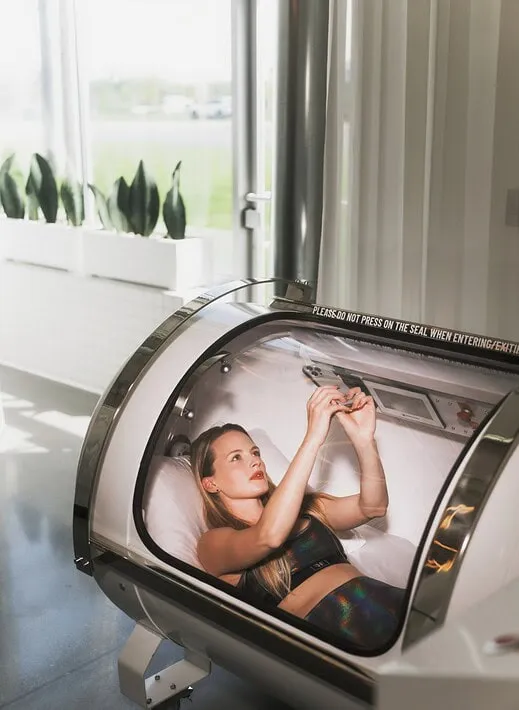
At ETHR LAB, the HBOT experience takes place in a hard-shell chamber. The service page lists a 45-minute HBOT Trial for $99 at up to 1.5 ATA for new clients, with other session and package options also available. Pressure changes can create an ear-popping sensation similar to an airplane flight, so the provider guides you through the process and expects you to communicate if anything feels uncomfortable.
Cryotherapy: brief, intense cold
Whole-body cryotherapy exposes the body to very cold, dry air for a short period. The experience is more intense and immediate than a quiet chamber session. ETHR LAB describes its electric whole-body cryotherapy experience as lasting under 3.5 minutes. The goal is not to deliver oxygen under pressure, but to provide a controlled cold-exposure experience.
Cold can temporarily dull the sensation of soreness, but temporary relief is not the same as faster tissue repair. Cleveland Clinic’s discussion of whole-body cryotherapy after exercise notes that the recovery evidence is still developing and that cold exposure may not be ideal for every training goal. Health Canada also cautions that strong wellness claims about cryotherapy devices have not been validated and highlights the need to understand safety risks. Read its cryotherapy safety guidance for additional context.
Which Recovery Goals Fit HBOT or Cryotherapy?
| If your priority is… | You may want to explore… | Why the fit may make sense |
|---|---|---|
| A longer, quieter recovery window | HBOT | The chamber session gives you time to rest while pressure and oxygen change the treatment environment. |
| A fast, energizing experience | Cryotherapy | The session is brief and intensely cold, which some people prefer when time is limited. |
| Exploring oxygen-focused recovery support | HBOT | Pressure increases the amount of oxygen that can dissolve in plasma. The mechanism is distinct from cold exposure. |
| Short-term sensation management after a demanding day | Cryotherapy | Cold may temporarily change how soreness feels, but it should not be sold as a guaranteed recovery result. |
| A structured recovery routine over time | Either, based on screening and response | The most useful option is the one that fits your goals, schedule, tolerance, and ability to track how you respond. |
The science also argues against overselling either choice. A systematic review and meta-analysis in Frontiers in Physiology found no significant effect from pre-exercise HBOT on performance and no significant post-exercise recovery effect in healthy, physically active adults, while noting that more research is needed. That does not make HBOT irrelevant. It means the honest question is whether it fits your personal recovery plan, not whether it guarantees a performance outcome.
For a more specific cold-modality comparison, you can also read ETHR LAB’s cryotherapy vs. ice baths guide. That article covers a different search question, while this guide focuses on choosing between HBOT and cryotherapy. If you want foundational context before comparing options, revisit ETHR LAB’s complete hyperbaric clinic guide for a broader look at what to expect from an HBOT visit.

Can You Combine HBOT and Cryotherapy?
Some people may want to use both because the experiences are complementary: cryotherapy is brief and stimulating, while HBOT is longer and oxygen-focused. Combining services should be a deliberate decision, not an assumption that more technology automatically means more recovery.
If you are considering both, ask the ETHR LAB team how to sequence them based on your goals and schedule. Share relevant health information, follow each service’s screening instructions, and do not stack sessions around an acute injury without guidance from an appropriate medical professional. Leave enough time to notice how you respond to each modality separately before trying a combined routine.
A simple way to test your plan is to track sleep, soreness, training load, energy, and next-day readiness. Keep the rest of your routine reasonably consistent. If you change several variables at once, it becomes difficult to know what helped, what did not, and what simply felt good in the moment.
Think of the first visit as information gathering, not a commitment to a long-term protocol. Before booking, ask what the session includes, how long you should plan to be at the facility, what screening questions apply, and what sensations are normal during the experience. For HBOT, ask how pressure changes are managed and what communication is available inside the chamber. For cryotherapy, ask what protective clothing is provided, how the session is supervised, and what the exit process looks like. These practical details can matter as much as the headline benefit because a treatment only helps your routine when you feel comfortable following the provider’s instructions.
It is also useful to separate immediate sensation from longer-term evaluation. Cryotherapy may feel energizing as soon as you step out, while HBOT may feel more like a quiet recovery block. Neither reaction proves a clinical result. Give yourself time to notice how each option fits your schedule, training, sleep, and next-day readiness. A clear goal and a short review period will help you make a better decision than choosing based on intensity alone.
How Do HBOT and Cryotherapy Trial Prices Compare?
ETHR LAB’s current service pages list two new-client trial entry points:
- HBOT Trial: $99 for 45 minutes at up to 1.5 ATA, new clients only.
- Cryotherapy Trial: $25 for a cryotherapy trial session, new clients only.
These prices are published by ETHR LAB on the HBOT service page and cryotherapy service page. Eligibility, timing, and available offers can change, so confirm the current details when you book online. The lower trial price does not mean cryotherapy is better, and the higher HBOT price does not guarantee a stronger result. The value depends on the experience and goal you are actually trying to support.
Compare ETHR LAB services and book online
Frequently Asked Questions
Is HBOT better than cryotherapy?
Neither is universally better. HBOT uses pressure and concentrated oxygen, while cryotherapy uses brief cold exposure. Choose based on your recovery goal, tolerance, schedule, screening results, and provider guidance rather than a blanket promise.
Which is faster, HBOT or cryotherapy?
Cryotherapy is the shorter session. ETHR LAB describes its whole-body cryotherapy experience as under 3.5 minutes. The HBOT trial is listed as 45 minutes. A shorter appointment does not automatically produce a better recovery outcome.
Can cryotherapy replace HBOT?
No. They use different mechanisms and create different experiences. Cryotherapy does not provide the pressurized oxygen environment of HBOT, and HBOT does not recreate the brief cold exposure of cryotherapy.
Should I use HBOT or cryotherapy for an injury?
Do not use a comparison article as a diagnosis or treatment plan. Have a new, severe, or persistent injury evaluated by an appropriate medical professional. Ask the provider whether either service is suitable as an adjunct to your care.
How do I choose between HBOT and cryotherapy at ETHR LAB?
Start with the result you want, then compare the session length, experience, price, and screening requirements. ETHR LAB’s team can explain the services and current booking options so you can make an informed choice in the Oakbrook Terrace location.


