What to Expect During Hyperbaric Oxygen Therapy Session
Your first hyperbaric oxygen therapy session is easier to picture when you know the sequence. You arrive, review the process, settle into the chamber, adjust gradually to pressure, breathe, and decompress before returning to your day. The experience is structured, and knowing the steps can make it feel less intimidating.
What to expect during hyperbaric oxygen therapy session: a general HBOT visit includes preparation and screening. Gradual pressurization, possible ear fullness or popping, a period of comfortable breathing and relaxation, and slow decompression. Exact timing, chamber setup, and aftercare instructions vary by provider and individual context.
This guide focuses on practical details that help you feel prepared while separating general HBOT information from ETHR LAB-specific guidance. For the broader context, read ETHR LAB’s hyperbaric oxygen therapy recovery, benefits, and cost guide. Then use this experience guide to plan questions for your first visit.
Explore ETHR LAB hyperbaric oxygen therapy
Arriving at ETHR LAB: What to Bring and Discuss
Your first visit is a chance to ask clear questions and understand how the experience is structured. ETHR LAB’s available customer information does not confirm a specific arrival checklist, chamber type, clothing policy, intake process, referral requirement, or post-session protocol. Treat the steps below as general preparation, not as a promise about ETHR LAB’s exact policy.
- Bring the information needed for a useful conversation. Have a simple overview of your goals, relevant health history, current medications or supplements, and questions about the experience. Patient suitability is an important topic to discuss before beginning. Ask how long the appointment is expected to take and what the visit includes. Cleveland Clinic highlights duration, safety, complications, eligibility, and post-treatment expectations as subjects patients should address with a qualified provider: Cleveland Clinic’s HBOT guidance.
- Ask what preparation applies to your appointment. Do not assume that a general internet checklist is ETHR LAB policy. Ask whether there are items to avoid before the session, what clothing is most comfortable. Whether you need to complete intake steps, and whether a medical evaluation or clearance is needed. Mayo Clinic explains that HBOT uses pure oxygen in an enclosed space with higher-than-normal air pressure, so provider-specific screening and safety instructions matter. Review Mayo Clinic’s overview of hyperbaric oxygen therapy for general education, then confirm what applies at ETHR LAB.
- Discuss comfort and communication before you begin. If you are concerned about enclosed spaces, ear pressure, or what happens while chamber pressure changes, say so early. Ask how you can communicate with the team during the session and what to do if you feel discomfort.
- Separate general education from the ETHR LAB experience. ETHR LAB is a modern wellness destination built around recovery, recharge, and accessible performance technologies. The available customer information does not verify exact arrival or session procedures, so the team should be your source for current operational details.
A prepared visit does not require memorizing technical terms. It means arriving ready to share relevant context and clarify the details that affect your comfort, eligibility, and expectations.
What to Expect During a Hyperbaric Oxygen Therapy Session Inside the Chamber
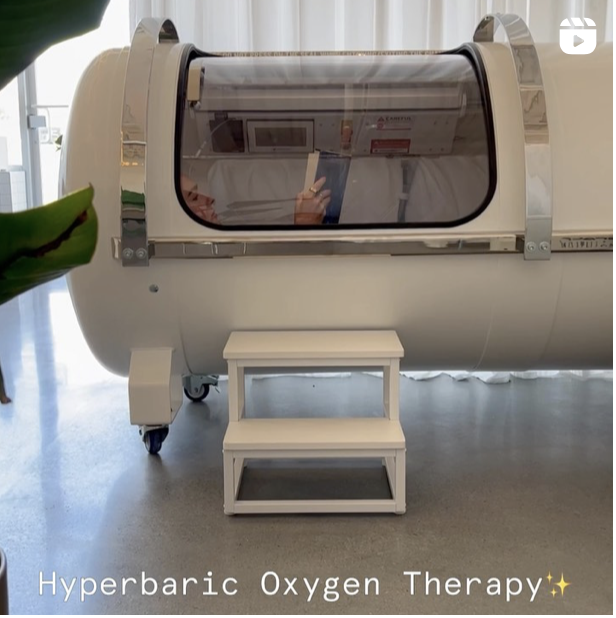
Knowing the sequence can make the experience feel straightforward from the start. General HBOT guidance describes a progression from entering the chamber to gradual pressurization, relaxed breathing, and slow decompression. Your provider’s chamber, instructions, and timing may differ, so treat this as an educational overview rather than a promise about a specific ETHR LAB session.
| Stage | What you may notice | What to do |
|---|---|---|
| Entry | Getting positioned | Ask how to communicate |
| Pressurization | Ear fullness or popping | Follow pressure guidance |
| Oxygen portion | Steady breathing | Relax and report discomfort |
| Decompression | Pressure returning toward baseline | Wait for exit instructions |
Here is the same flow in more detail.
Enter and get comfortable. You will be guided into the chamber and positioned for the session. Chamber designs and setups vary by location, and ETHR LAB’s available information does not confirm a specific chamber type. Once you are settled, ask how you will communicate with the team and what to do if you need assistance.
Adjust as pressure rises gradually. The chamber does not move instantly to its prescribed pressure. As pressure increases, you may notice fullness, muffled hearing, or popping in your ears, similar to the sensation during airplane takeoff or changing elevation. Tufts Medicine notes that this adjustment sensation commonly occurs during the first 10 to 15 minutes, although your experience can vary. Follow the provider’s instructions and speak up if a sensation feels painful or does not ease.
Settle into breathing and relaxation. After the chamber reaches its prescribed pressure, many people feel comfortable and relaxed. Use the treatment time to breathe steadily, rest, and let the staff know if you have questions. The goal is not to force a particular response. Focus on staying comfortable and following the instructions provided for your setup.
Complete the session and decompress slowly. At the end, pressure is reduced gradually rather than released all at once. You may notice another change in ear sensation as decompression begins. Stay relaxed, follow the team’s directions, and wait until you are told the process is complete before exiting. Tufts Medicine describes most HBOT sessions as lasting 90 minutes to two hours, but that is a general reference range, not an ETHR LAB guarantee. Ask about the expected schedule when booking.
This step-by-step flow is why a first session can feel more approachable than the equipment initially suggests. For general education on the sequence, see Tufts Medicine’s guide to what to expect during HBOT.
What Happens to Your Body During the Session?
During a hyperbaric oxygen therapy session, your body is exposed to two connected changes. Air pressure rises above normal, and you breathe oxygen in the chamber environment. Mayo Clinic explains that HBOT increases oxygen delivery by providing pure oxygen in an enclosed space with higher-than-normal air pressure. The pressure level and oxygen setup depend on the equipment and provider, so general education should not be confused with a promise about one specific session.
Pressure changes affect how oxygen behaves in the body. At higher pressure, the lungs can take in more oxygen than they could while breathing pure oxygen at normal air pressure. Johns Hopkins Medicine describes HBOT as breathing pure oxygen at pressure levels higher than average, with the goal of increasing oxygen available to the body’s tissues. That is the basic mechanism behind the experience. You breathe normally while the chamber follows its prescribed process.
The experience is also why the session is paced rather than rushed. As pressure changes, you may notice fullness, popping, or pressure in your ears, similar to airplane takeoff. That sensation is related to pressure balancing, not proof that a specific outcome is occurring. If anything feels uncomfortable, tell the staff instead of trying to push through it.
It is important to separate the physiology of HBOT from medical treatment claims. Mayo Clinic and Johns Hopkins discuss HBOT in the context of specific medical indications. ETHR LAB’s wellness content should not suggest that a session diagnoses, treats, or cures a condition. Your eligibility, chamber settings, and appropriate use depend on your individual context and the guidance available from the provider. For a practical overview of common considerations, review HBOT safety and side effects before booking or arriving.
In short, the body-level explanation is straightforward. Controlled pressure changes the environment, oxygen availability increases within that environment, and the session gives you time to breathe and adjust. The details that matter most are the ones you can discuss in advance, including your health history, current concerns, and questions about comfort or safety.
For authoritative background, see Mayo Clinic’s HBOT overview and Johns Hopkins Medicine’s explanation of hyperbaric oxygen therapy.
After the Session: How You May Feel
The final stage is decompression. Instead of changing pressure all at once, the chamber pressure is gradually reduced before you exit. This slower transition is a standard part of the session sequence described by Tufts Medicine’s HBOT guide. You may notice the pressure sensation shifting as the chamber returns toward its starting level.
Once decompression is complete, you transition out of the chamber and check in with the staff. This is a useful moment to mention anything you noticed during the session, including ear pressure, discomfort, anxiety, or questions about the next visit. A provider may also review what happens next based on your individual circumstances.
Why aftercare is not one-size-fits-all
There is no single set of post-session instructions that applies to every person or every setting. The right guidance can depend on why someone is receiving HBOT, their health history, the chamber protocol, and how the session felt. ETHR LAB’s available information does not establish universal post-session restrictions, driving rules, required rest periods, or guaranteed sensations. Confirm those details directly with the team rather than assuming a generic rule applies.
For general safety context, Mayo Clinic’s overview of hyperbaric oxygen therapy notes that complications are generally mild and temporary, but pressure and oxygen exposure can produce effects such as ear pain or sinus pressure. That does not mean you should expect a particular reaction. It means communicating clearly with staff matters, especially if a sensation is uncomfortable or does not settle.
- Ask what is normal for the specific chamber and protocol.
- Confirm whether you have provider-specific instructions before leaving.
- Share unusual or persistent symptoms instead of trying to interpret them on your own.
The goal of this walkthrough is to make the experience easier to picture, not to promise a particular outcome. Your post-session experience may be uneventful, and your provider’s guidance should remain the final word for your visit.
Booking Your First HBOT Session at ETHR LAB
Once you understand the general flow, booking your first visit should feel straightforward. ETHR LAB is built around making advanced recovery and performance technologies more accessible. The modern wellness experience is designed for people focused on recovery, recharge, proactive health, or whole-body optimization. The goal is to help you explore the technology with clear expectations, not to make unsupported promises about what you will feel or achieve.
Start with the current ETHR LAB hyperbaric oxygen therapy service page to review the local offering in Oakbrook Terrace. The available customer information does not confirm every booking detail, including exact chamber specifications, session timing, or required screening steps. Use the current service information as your starting point and follow any instructions provided when you schedule.
Offers, availability, and booking details can change, so confirm current terms directly on the service destination before making plans. This keeps your decision grounded in the latest information rather than an outdated blog reference.
Online self-service booking is the practical next step. Before selecting a time, consider what you want to ask about your first visit, including how long to allow. What preparation the provider recommends, and whether any personal health considerations should be discussed in advance. Bring those questions with you so your appointment can stay focused and comfortable.
View the service details and book online
Frequently Asked Questions
What should you avoid before going into a hyperbaric chamber?
Follow the provider’s instructions about clothing, products, food, and medications before arrival. Share relevant health information and ask what you should leave outside the chamber. Preparation rules can vary by facility and personal circumstances, so do not rely on a generic checklist. Cleveland Clinic includes pre-session precautions and safety considerations among the key topics to review before HBOT.
How long does a hyperbaric oxygen therapy session take?
The full appointment includes entering the chamber, gradual pressurization, the oxygen portion, and decompression. Tufts Medicine says most hyperbaric oxygen therapy sessions last about 90 minutes to two hours. But the schedule at ETHR LAB may depend on the service and your appointment details. Confirm the expected timing when you book so you can plan your arrival and departure.
Is ear pressure during the session normal?
A feeling of fullness or popping can happen as chamber pressure rises, similar to the sensation during airplane takeoff. Tufts Medicine says this commonly occurs during the first 10 to 15 minutes. Tell the staff if the pressure feels uncomfortable or does not improve. They can guide you through pressure adjustment rather than asking you to push through it.
Do you need a medical evaluation or referral before HBOT?
That depends on the provider, the service, and your individual health history. Cleveland Clinic identifies eligibility and safety screening as important parts of considering HBOT. Ask ETHR LAB what information or screening is needed for your appointment. Especially if you have a medical condition, take medication, or are unsure whether this experience is appropriate for you.
What happens after a hyperbaric oxygen therapy session?
At the end, chamber pressure is gradually reduced before you exit. You can ask the staff what sensations or next steps are expected for your appointment. ETHR LAB’s exact post-session instructions are not confirmed in the available service information. So follow the guidance provided on the day and ask when to contact the team with a concern.
Ready to Book Your First HBOT Session?
Knowing the general flow can make your first visit feel more approachable, from arrival through decompression. Explore ETHR LAB’s hyperbaric oxygen therapy options and choose the next step that fits your wellness goals.